
Aktualna faza Księżyca na dziś i tę noc to Ubywający sierp. Księżyc jest teraz oświetlony w 3.8 % i jest ubywający. Dziś Księżyc ma 27.7 dni.
Przybliżona odległość Ziemi od Księżyca wynosi 381,430, a do następnej fazy pozostało 1.8 dni – (Nów).
Odwiedź także Październik 2026 Kalendarz faz Księżyca, aby zobaczyć wszystkie dzienne fazy Księżyca w tym miesiącu.
Aktualny czas: 11.15.
Panel powyżej pokazuje dzisiejszą fazę Księżyca wraz z jej oświetleniem, wiekiem i odległością od Ziemi, obliczonymi dla Twojej strefy czasowej i w UTC. Księżyc znajduje się gdzieś w swoim 29,5-dniowym cyklu między nowiem a pełnią, a faza ta jest taka sama dla wszystkich na Ziemi — różni się tylko dokładny czas lokalny.
Stąd możesz sprawdzić fazę Księżyca dla dowolnej daty, otworzyć miesięczny lub roczny kalendarz Księżyca, odliczać czas do najbliższej pełni oraz znaleźć nadchodzące superksiężyce, mikroksiężyce i zaćmienia. Wszystko jest obliczane na żywo na podstawie precyzyjnych wzorów astronomicznych — za darmo i bez rejestracji.

Faza Księżyca dziś: Ubywający sierp
Poprzednia faza: Ostatnia kwadra ()
Odległość Księżyca: 381,430 km
Oświetlenie: 3.8 %
Wiek Księżyca: 27.7 dni
Następna faza: Nów ()
Rozmiar kątowy Księżyca: 0.52
Odległość Słońca: 149,462,571 km
Znak zodiaku Księżyca: Panna

2026-09-11 – 2026-10-10
| Faza Księżyca | DATA I GODZINA |
DATA I GODZINA (UTC) |
|---|---|---|
| Nów | ||
| Pierwsza kwadra | ||
| Pełnia | ||
| Ostatnia kwadra | ||
| Nów |
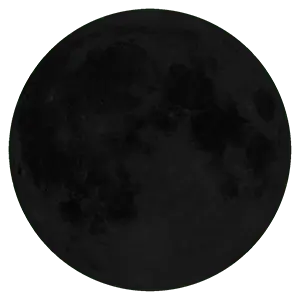
To pierwsza i niewidoczna faza Księżyca – oświetlona strona Księżyca zwrócona jest ku Słońcu, a nocna ku Ziemi. Nów jest bezpośrednio widoczny tylko podczas zaćmienia Słońca.
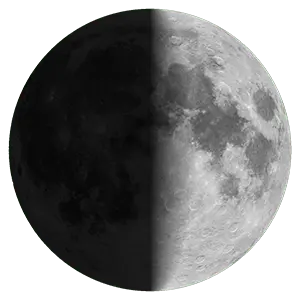
Pierwsza kwadra
Tydzień po nowiu następuje pierwsza kwadra, gdy Księżyc przebył ćwierć swojej orbity. Nazywana jest też półksiężycem. Księżyc w pierwszej kwadrze wschodzi około południa i zachodzi około północy.
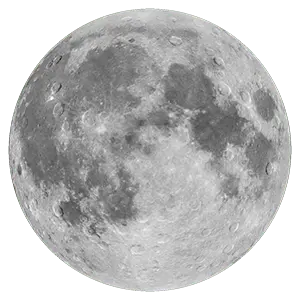
Pełnia
Przy 100 % oświetlenia dzienna strona Księżyca jest zwrócona wprost ku nocnej stronie Ziemi i Księżyc jest w pełni. Pełnia wschodzi o zachodzie Słońca i zachodzi o wschodzie, a przy horyzoncie wydaje się większa.
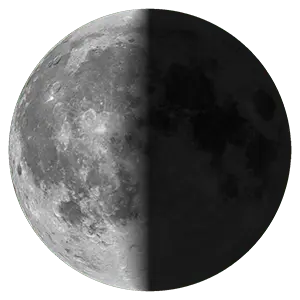
Ostatnia kwadra
Księżyc wchodzi w ostatnią (trzecią) kwadrę swojej orbity w wieku prawie 23 dni. Oświetlona wydaje się tylko połowa. Tę fazę widać późną nocą i wczesnym rankiem (około 6).
No, it doesn’t generate its own light. “Moonlight” is really sunlight that has reflected off of the Moon’s surface. In the same way that the Sun illuminates Earth, the Moon reflects the Sun's light, making it appear bright in our sky.
Więcej Fakty o KsiężycuThe Moon crust is made of composed primarily of oxygen (O), silicon (Si), magnesium (Mg), iron (Fe), calcium (Ca), and aluminum (Al), but important minor and trace elements such as titanium (Ti), uranium (U), thorium (Th), potassium (K), and hydrogen (H) are present as well. Below the crust is the mantle coming, with a thickness of roughly 1350 km is far more extensive than the crust, which has an average thickness of about 50 km. The mantle is made of olivine, orthopyroxene and clino pyroxene. Finally, at the center is the Moon’s dense, metallic core. The core is largely composed of iron (Fe) and some nickel (Ni). The inner core is a solid mass of about 480 km in diameter. Surrounding the solid inner core is a fluid outer core, that brings the total diameter of the core to about 660 km.
Więcej Fakty o KsiężycuAn analysis of moon's mineral composition suggests that the moon is around 4.425 billion years old.
Więcej Fakty o KsiężycuA "micromoon" is a term used in popular astronomy to describe a full moon or a new moon that occurs when the moon is at or near its apogee, which is the furthest point from Earth in its elliptical orbit. This is the opposite of a "supermoon," which occurs when a full moon or new moon is at or near its perigee, which is the closest point to Earth in its orbit."
Więcej Fakty o KsiężycuHere are the top 5 things that make the Moon so unique.
1. The Moon is Earth's only permanent natural satellite.
2. Moon dust smells like gunpowder.
3. The Moon keeps the same face pointing toward the Earth.
4. The Moon has no – or just a really thin – atmosphere so there is no weather.
5. The Moon is visible in daylight nearly every day.
The Third Quarter (sometimes called as Last Quarter) is the seventh lunar phase. The Moon looks like its half illuminated from the perspective of Earth, but you’re really seeing just half of the Moon, that’s illuminated by the Sun, so it’s a quarter. You can see this phase at from midnight to early morning (6 am).
Więcej Fazy KsiężycaThis is the sixth phase of the Moon. The waning gibbous phase is between a Full moon and a Half moon and it means that the Moon is getting smaller and smaller. A Wanning Gibbous Moon rises around 9 pm and sets around 9 am.
Więcej Fazy KsiężycaThe Moon is always half-lit by the sun (except during a lunar eclipse). The side of the Moon facing the Sun appears bright because of reflected sunlight, and the side of the Moon facing away from the Sun is dark. Our perspective on the half-lit Moon changes as the Moon orbits Earth. When the side nearest to us is fully lit, we call this a full Moon. When the far side is fully lit and the near side is dark, we call this a new Moon. When we see other phases, we are looking at the division between lunar night (the dark part) and day (the bright part).
Więcej Fazy KsiężycaThis is the second phase of the Moon. It occurs when the illuminated half of the Moon faces mostly away from Earth, with only a tiny portion visible to us from our planet. It grows daily as the Moon’s orbit carries the Moon’s dayside farther into view. Every day, the Moon rises a little bit later.
Więcej Fazy KsiężycaThe 8 moon phases in order are new moon, waxing crescent, first quarter, waxing gibbous, full moon, waning gibbous, last quarter, and waning crescent. The Moon displays these eight phases one after the other as it moves through its cycle each month. It takes 27 days for the Moon to orbit Earth. That means the Moon's cycle is 27 days long.
Więcej Fazy KsiężycaAt first, Blue Moon is nothing to do with the actual color of the Moon. A Blue Moon is the second Full Moon in a calendar month. Typically, months have only one Full Moon, but sometimes a second one sneaks in. Most months are 30 or 31 days long while Full Moons are separated by 29 days, so it’s possible to fit two full moons in a single month. This happens every two and a half years, on average. Blue Moons dependent on the Gregorian calendar and time zones so you should check our Moon Calendar.
Więcej CiekawostkiNo one. According to international law, no one can lay territorial claim to the Moon or any other celestial body, so a national flag on the Moon is purely symbolic. There are also websites where you can buy a certificate saying you own a plot of land on the Moon, but this isn't worth the paper it is written on.
Więcej CiekawostkiIn many languages the Moon is gender neutral, in other languages it’s not. For example, in French, the Moon is feminine (la lune) and in German, the Moon is masculine (der Mond). From a cultural point of view, the Moon is often referred as feminine. For example, in Greek mythology, Selene was the Goddess of the Moon and so the Moon has been known as Selene. In Roman mythology, it was the Goddess Luna, from where we get Lunar cycles from. This would give the moon a female gender.
Więcej CiekawostkiMoon dust smells like gunpowder. Just to be clear, moondust and gunpowder are not the same thing, so why is this gunpowder smell? No one really knows.
Więcej CiekawostkiBelievers in the lunar cycle effects on human bodies (including the hair) ascribe a similarly forceful effect of this gravitational field on the bodies of humans and animals. According to their belief system, hair grows stronger, hair care products work better, and the styling is more beautiful if the hair care regimen is scheduled according to the lunar calendar. Conditions during the waxing moon promote hair growth after a haircut. Therefore, you should cut your hair between the new and full moon if you want your hair to grow fast after a haircut.
Więcej Ciekawostki




MoonPhaseToday.org pozwala sprawdzić fazę Księżyca na dziś i tę noc, a także na dowolny dzień, miesiąc i rok. Obliczenia fazy Księżyca opierają się na Twojej strefie czasowej, ale pokazujemy też dokładne godziny w formacie UTC. Mamy nadzieję, że nasze narzędzie okaże się przydatne i wygodne w sprawdzaniu faz Księżyca.
MoonPhaseToday.org