
Текущая фаза Луны на сегодня и эту ночь — Убывающий серп. Луна сейчас освещена на 3.8 % и является убывающая. Сегодня возраст Луны составляет 27.7 дней.
Приблизительное расстояние от Земли до Луны составляет 381,430, и до следующей фазы осталось 1.8 дней — (Новолуние).
Посетите также Октябрь 2026 Календарь фаз Луны, чтобы увидеть все ежедневные фазы Луны в этом месяце.
Текущее время: 11.15.
На панели выше показана сегодняшняя фаза Луны вместе с её освещённостью, возрастом и расстоянием до Земли, рассчитанными для вашего часового пояса и в UTC. Луна находится где-то в своём 29,5-дневном цикле между новолунием и полнолунием, и эта фаза одинакова для всех на Земле — отличается лишь точное местное время.
Отсюда можно узнать фазу Луны на любую дату, открыть месячный или годовой лунный календарь, вести обратный отсчёт до ближайшего полнолуния и найти будущие суперлуния, микролуния и затмения. Всё вычисляется в реальном времени по точным астрономическим формулам — бесплатно и без регистрации.

Фаза Луны сегодня: Убывающий серп
Предыдущая фаза: Последняя четверть ()
Расстояние до Луны: 381,430 km
Освещённость: 3.8 %
Возраст Луны: 27.7 дн.
Следующая фаза: Новолуние ()
Угловой размер Луны: 0.52
Расстояние до Солнца: 149,462,573 km
Знак зодиака Луны: Дева

2026-09-11 – 2026-10-10
| Фаза Луны | ДАТА И ВРЕМЯ |
ДАТА И ВРЕМЯ (UTC) |
|---|---|---|
| Новолуние | ||
| Первая четверть | ||
| Полнолуние | ||
| Последняя четверть | ||
| Новолуние |
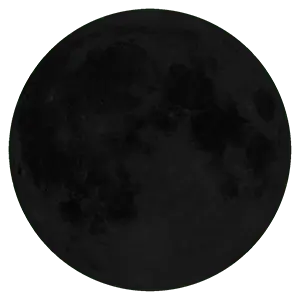
Это первая и невидимая фаза Луны: освещённая сторона Луны обращена к Солнцу, а ночная — к Земле. Новолуние видно напрямую только во время солнечного затмения.
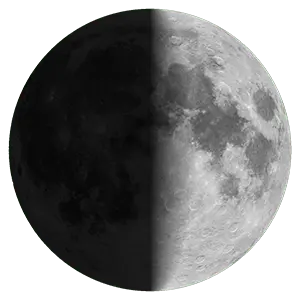
Первая четверть
Через неделю после новолуния наступает первая четверть, когда Луна проходит четверть своей орбиты. Эту фазу также называют полумесяцем. Луна в первой четверти восходит около полудня и заходит около полуночи.
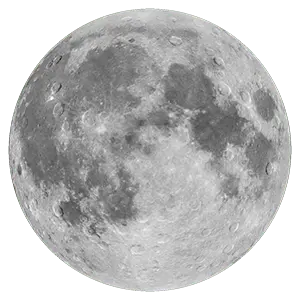
Полнолуние
При 100 % освещённости дневная сторона Луны обращена прямо к ночной стороне Земли, и Луна полная. Полнолуние восходит на закате и заходит на рассвете, а у горизонта кажется крупнее.
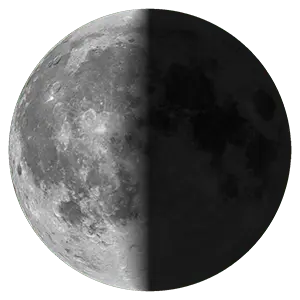
Последняя четверть
Луна входит в последнюю (третью) четверть своей орбиты в возрасте почти 23 дней. Освещённой кажется лишь половина. Эту фазу видно поздней ночью и ранним утром (около 6 утра).
The Moon is the fifth largest satellite in the Solar System and the biggest in comparison to its host planet, with a diameter about one-quarter that of Earth. The exact diameter is 2159.14 miles (3 474.8 km ).
Подробнее Факты о ЛунеA "micromoon" is a term used in popular astronomy to describe a full moon or a new moon that occurs when the moon is at or near its apogee, which is the furthest point from Earth in its elliptical orbit. This is the opposite of a "supermoon," which occurs when a full moon or new moon is at or near its perigee, which is the closest point to Earth in its orbit."
Подробнее Факты о ЛунеNo, the moon has no water and has only a very thin and tenuous atmosphere (called an exosphere) so it cannot trap heat or insulate the surface. So, for example, there is no wind to create weather system. The Moon does, in fact, affect the Earth's climate and weather patterns in several subtle ways.
Подробнее Факты о ЛунеA supermoon occurs when the Moon's orbit is closest (perigee) to Earth at the same time the Moon is full. At such a time, the Moon can look larger and brighter than it normally does - especially when it is seen rising above the horizon. However, it's important to note that the actual difference in size and brightness between a supermoon and an average full moon is not typically dramatic, and may not be noticeable to the naked eye without a direct comparison.
Подробнее Факты о ЛунеAn orange moon means the shorter wavelengths of light are being filtered away. This could be due to the low position on the horizon causing the light to go through more atmosphere, smoke in the air, or pollution.
Подробнее Факты о ЛунеThis is the fourth phase of the Moon. The waxing gibbous phase is between a Half Moon and Full Moon and waxing means that the Moon is getting bigger and bigger. This phase of the Moon can be seen from late afternoon and most of the night (from 3 pm to 3 am).
Подробнее Фазы ЛуныThis is the first and invisible phase of the Moon, with the illuminated side of the Moon facing the Sun and the night side facing the Earth.
Подробнее Фазы ЛуныThis is the eighth and also the final phase of the Moon. The Moon is nearly back to the point in its orbit where its dayside directly faces the Sun, and all that we see from our perspective is a thin curve. The Wanning Crescent Moon can be seen from pre-dawn to early afternoon.
Подробнее Фазы ЛуныThe 8 moon phases in order are new moon, waxing crescent, first quarter, waxing gibbous, full moon, waning gibbous, last quarter, and waning crescent. The Moon displays these eight phases one after the other as it moves through its cycle each month. It takes 27 days for the Moon to orbit Earth. That means the Moon's cycle is 27 days long.
Подробнее Фазы ЛуныThe Full Moon is the fifth lunar phase. The Moon appears fully illuminated from Earth's perspective. This occurs when Earth is located between the Sun and the Moon. A Full Moon rises around sunset and sets around sunrise.
Подробнее Фазы ЛуныBelievers in the lunar cycle effects on human bodies (including the hair) ascribe a similarly forceful effect of this gravitational field on the bodies of humans and animals. According to their belief system, hair grows stronger, hair care products work better, and the styling is more beautiful if the hair care regimen is scheduled according to the lunar calendar. Conditions during the waxing moon promote hair growth after a haircut. Therefore, you should cut your hair between the new and full moon if you want your hair to grow fast after a haircut.
Подробнее ИнтересноеNo one. According to international law, no one can lay territorial claim to the Moon or any other celestial body, so a national flag on the Moon is purely symbolic. There are also websites where you can buy a certificate saying you own a plot of land on the Moon, but this isn't worth the paper it is written on.
Подробнее ИнтересноеMoon dust smells like gunpowder. Just to be clear, moondust and gunpowder are not the same thing, so why is this gunpowder smell? No one really knows.
Подробнее ИнтересноеAt first, Blue Moon is nothing to do with the actual color of the Moon. A Blue Moon is the second Full Moon in a calendar month. Typically, months have only one Full Moon, but sometimes a second one sneaks in. Most months are 30 or 31 days long while Full Moons are separated by 29 days, so it’s possible to fit two full moons in a single month. This happens every two and a half years, on average. Blue Moons dependent on the Gregorian calendar and time zones so you should check our Moon Calendar.
Подробнее ИнтересноеA lunar eclipse occurs when the Moon moves into the Earth's shadow. This can occur only when the Sun, Earth, and Moon are exactly or very closely aligned with Earth between the other two, which can happen only on the night of a Full Moon. A total lunar eclipse occurs when the Moon falls entirely within the Earth's umbra.
Подробнее Интересное




MoonPhaseToday.org позволяет узнать фазу Луны на сегодня и эту ночь, а также на любой день, месяц и год. Расчёт фазы Луны основан на вашем часовом поясе, но мы также показываем точное время в формате UTC. Надеемся, наш инструмент будет полезным и удобным для определения фаз Луны.
MoonPhaseToday.org