
Bugün ve bu gece için güncel Ay evresi Küçülen Hilal evresidir. Ay şu anda 3.8 % aydınlık ve küçülen. Bugün Ay 27.7 günlüktür.
Dünya ile Ay arasındaki yaklaşık uzaklık 381,430 ve bir sonraki evreye 1.8 gün kaldı – (Yeni Ay).
Bu aydaki tüm günlük Ay evrelerini görmek için Ekim 2026 Ay Evreleri Takvimi sayfasını da ziyaret edin.
Geçerli saat: 11.15.
Yukarıdaki panel, bugünkü Ay evresini aydınlanması, yaşı ve Dünya'ya uzaklığı ile birlikte, kendi saat dilimin ve UTC için hesaplanmış olarak gösterir. Ay, Yeni Ay ile Dolunay arasındaki 29,5 günlük döngüsünün bir yerindedir ve bu evre Dünya'daki herkes için aynıdır — yalnızca kesin yerel saat değişir.
Buradan herhangi bir tarihin Ay evresine bakabilir, aylık veya yıllık bir ay takvimi açabilir, bir sonraki Dolunay'a geri sayabilir ve yaklaşan süper aylar, mikro aylar ve tutulmaları bulabilirsin. Her şey kesin astronomik formüllerden canlı olarak hesaplanır — ücretsiz ve kayıt gerektirmez.

Bugün Ay Evresi: Küçülen Hilal
Önceki evre: Son Dördün ()
Ay uzaklığı: 381,430 km
Aydınlanma: 3.8 %
Ay yaşı: 27.7 gün
Sonraki evre: Yeni Ay ()
Ay açısal boyutu: 0.52
Güneş uzaklığı: 149,462,572 km
Ay’ın Burcu: Başak

2026-09-11 – 2026-10-10
| Ay Evresi | TARİH VE SAAT |
TARİH VE SAAT (UTC) |
|---|---|---|
| Yeni Ay | ||
| İlk Dördün | ||
| Dolunay | ||
| Son Dördün | ||
| Yeni Ay |
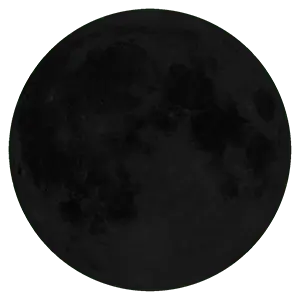
Bu, Ay’ın ilk ve görünmeyen evresidir; Ay’ın aydınlık tarafı Güneş’e, gece tarafı Dünya’ya dönüktür. Yeni Ay yalnızca bir Güneş tutulması sırasında doğrudan görülebilir.
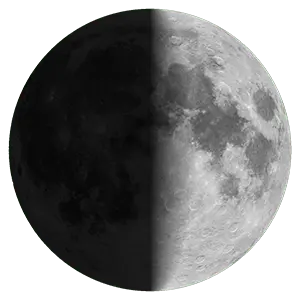
İlk Dördün
Yeni Ay’dan bir hafta sonra, Ay yörüngesinin dörtte birini tamamladığında İlk Dördün gelir. Yarım Ay olarak da adlandırılır. İlk Dördün Ayı öğle civarı doğar, gece yarısı civarı batar.
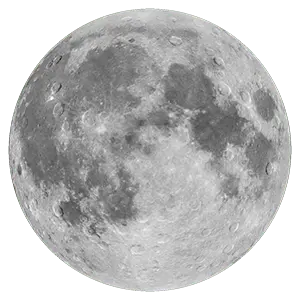
Dolunay
%100 aydınlanmada Ay’ın gündüz tarafı doğrudan Dünya’nın gece tarafına dönüktür ve Ay doludur. Dolunay gün batımında doğar, gün doğumunda batar ve ufka yakınken daha büyük görünür.
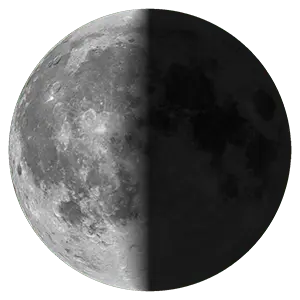
Son Dördün
Ay, yaklaşık 23 günlükken yörüngesinin Son (Üçüncü) Dördün evresine girer. Yalnızca yarısı aydınlık görünür. Bu evre gece geç saatlerde ve sabah erken (saat 6) görülebilir.
The Moon is the fifth largest satellite in the Solar System and the biggest in comparison to its host planet, with a diameter about one-quarter that of Earth. The exact diameter is 2159.14 miles (3 474.8 km ).
Daha fazla Ay GerçekleriIt depends on the time of day. The Moon is very hot in the daytime and very cold at night. The average temperature on the Moon varies from -298 degrees Fahrenheit (-183 degrees Celsius), at night, to 224 degrees Fahrenheit (106 degrees Celsius) during the day.
Daha fazla Ay GerçekleriThe Moon makes Earth a more livable planet by moderating our home planet's wobble on its axis, leading to a relatively stable climate.
Daha fazla Ay GerçekleriAn analysis of moon's mineral composition suggests that the moon is around 4.425 billion years old.
Daha fazla Ay GerçekleriA "micromoon" is a term used in popular astronomy to describe a full moon or a new moon that occurs when the moon is at or near its apogee, which is the furthest point from Earth in its elliptical orbit. This is the opposite of a "supermoon," which occurs when a full moon or new moon is at or near its perigee, which is the closest point to Earth in its orbit."
Daha fazla Ay GerçekleriThe Full Moon is the fifth lunar phase. The Moon appears fully illuminated from Earth's perspective. This occurs when Earth is located between the Sun and the Moon. A Full Moon rises around sunset and sets around sunrise.
Daha fazla Ay EvreleriThe First Quarter is the third lunar phase. The Moon is a quarter of the way around its orbit and you see half of its illuminated side. That’s why sometimes it is also termed as Half Moon. A first quarter moon rises around noon and sets around midnight. It’s high in the sky in the evening and makes for excellent viewing.
Daha fazla Ay EvreleriThis is the fourth phase of the Moon. The waxing gibbous phase is between a Half Moon and Full Moon and waxing means that the Moon is getting bigger and bigger. This phase of the Moon can be seen from late afternoon and most of the night (from 3 pm to 3 am).
Daha fazla Ay EvreleriThis is the first and invisible phase of the Moon, with the illuminated side of the Moon facing the Sun and the night side facing the Earth.
Daha fazla Ay EvreleriThis is the second phase of the Moon. It occurs when the illuminated half of the Moon faces mostly away from Earth, with only a tiny portion visible to us from our planet. It grows daily as the Moon’s orbit carries the Moon’s dayside farther into view. Every day, the Moon rises a little bit later.
Daha fazla Ay EvreleriNo one. According to international law, no one can lay territorial claim to the Moon or any other celestial body, so a national flag on the Moon is purely symbolic. There are also websites where you can buy a certificate saying you own a plot of land on the Moon, but this isn't worth the paper it is written on.
Daha fazla EğlenceliBelievers in the lunar cycle effects on human bodies (including the hair) ascribe a similarly forceful effect of this gravitational field on the bodies of humans and animals. According to their belief system, hair grows stronger, hair care products work better, and the styling is more beautiful if the hair care regimen is scheduled according to the lunar calendar. Conditions during the waxing moon promote hair growth after a haircut. Therefore, you should cut your hair between the new and full moon if you want your hair to grow fast after a haircut.
Daha fazla EğlenceliAt first, Blue Moon is nothing to do with the actual color of the Moon. A Blue Moon is the second Full Moon in a calendar month. Typically, months have only one Full Moon, but sometimes a second one sneaks in. Most months are 30 or 31 days long while Full Moons are separated by 29 days, so it’s possible to fit two full moons in a single month. This happens every two and a half years, on average. Blue Moons dependent on the Gregorian calendar and time zones so you should check our Moon Calendar.
Daha fazla EğlenceliIn many languages the Moon is gender neutral, in other languages it’s not. For example, in French, the Moon is feminine (la lune) and in German, the Moon is masculine (der Mond). From a cultural point of view, the Moon is often referred as feminine. For example, in Greek mythology, Selene was the Goddess of the Moon and so the Moon has been known as Selene. In Roman mythology, it was the Goddess Luna, from where we get Lunar cycles from. This would give the moon a female gender.
Daha fazla EğlenceliA lunar eclipse occurs when the Moon moves into the Earth's shadow. This can occur only when the Sun, Earth, and Moon are exactly or very closely aligned with Earth between the other two, which can happen only on the night of a Full Moon. A total lunar eclipse occurs when the Moon falls entirely within the Earth's umbra.
Daha fazla Eğlenceli






MoonPhaseToday.org, bugün ve bu gece ya da herhangi bir gün, ay ve yıl için Ay evresini görüntülemenizi sağlar. Ay evresi hesaplaması saat diliminize göre yapılır, ancak size tam saatleri UTC biçiminde de gösteririz. Aracımızı Ay evrelerini bulmak için kullanışlı ve kolay bulacağınızı umuyoruz.
MoonPhaseToday.org