
Fase Bulan saat ini untuk hari ini dan malam ini adalah Sabit Akhir. Bulan kini 3.8 % terlihat dan sedang menyusut. Hari ini umur Bulan adalah 27.7 hari.
Perkiraan jarak dari Bumi ke Bulan adalah 381,430, dan tersisa 1.8 hari menuju fase berikutnya – (Bulan Baru).
Kunjungi juga Oktober 2026 Kalender Fase Bulan untuk melihat semua fase Bulan harian pada bulan ini.
Waktu saat ini: 11.15.
Panel di atas menampilkan fase Bulan hari ini, beserta pencahayaan, umur, dan jaraknya dari Bumi, yang dihitung untuk zona waktu Anda dan dalam UTC. Bulan berada di suatu titik dalam siklus 29,5 harinya antara Bulan Baru dan Bulan Purnama, dan fase itu sama bagi semua orang di Bumi — hanya waktu lokal pastinya yang berbeda.
Dari sini Anda dapat mencari fase Bulan untuk tanggal mana pun, membuka kalender Bulan bulanan atau tahunan, menghitung mundur ke Bulan Purnama berikutnya, dan menemukan Bulan Super, Bulan Mikro, serta gerhana yang akan datang. Semuanya dihitung secara langsung dari rumus astronomi yang presisi — gratis dan tanpa pendaftaran.

Fase Bulan Hari Ini: Sabit Akhir
Fase sebelumnya: Kuartal Terakhir ()
Jarak Bulan: 381,430 km
Pencahayaan: 3.8 %
Umur Bulan: 27.7 hari
Fase berikutnya: Bulan Baru ()
Ukuran sudut Bulan: 0.52
Jarak Matahari: 149,462,572 km
Zodiak Bulan: Virgo

2026-09-11 – 2026-10-10
| Fase Bulan | TANGGAL DAN WAKTU |
TANGGAL DAN WAKTU (UTC) |
|---|---|---|
| Bulan Baru | ||
| Kuartal Pertama | ||
| Bulan Purnama | ||
| Kuartal Terakhir | ||
| Bulan Baru |
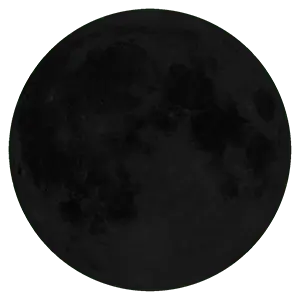
Ini adalah fase pertama Bulan yang tidak terlihat, dengan sisi Bulan yang terang menghadap Matahari dan sisi malam menghadap Bumi. Bulan Baru hanya terlihat langsung saat gerhana Matahari.
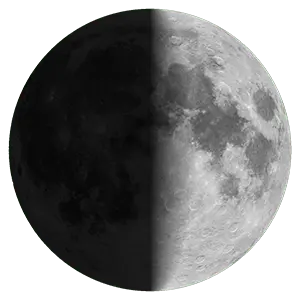
Kuartal Pertama
Seminggu setelah Bulan Baru tiba Kuartal Pertama, saat Bulan menempuh seperempat orbitnya. Disebut juga Bulan Separuh. Bulan Kuartal Pertama terbit sekitar tengah hari dan terbenam sekitar tengah malam.
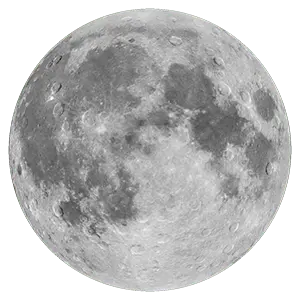
Bulan Purnama
Pada pencahayaan 100 %, sisi siang Bulan menghadap langsung ke sisi malam Bumi dan Bulan menjadi purnama. Bulan Purnama terbit saat Matahari terbenam dan terbenam saat Matahari terbit, serta tampak lebih besar di dekat cakrawala.
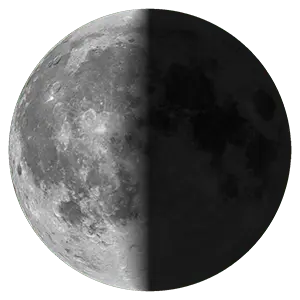
Kuartal Terakhir
Bulan memasuki Kuartal Terakhir (Ketiga) orbitnya pada umur hampir 23 hari. Hanya separuhnya yang tampak terang. Fase ini terlihat larut malam dan pagi hari (sekitar pukul 6).
The Moon makes Earth a more livable planet by moderating our home planet's wobble on its axis, leading to a relatively stable climate.
Selengkapnya Fakta BulanAn analysis of moon's mineral composition suggests that the moon is around 4.425 billion years old.
Selengkapnya Fakta BulanAn orange moon means the shorter wavelengths of light are being filtered away. This could be due to the low position on the horizon causing the light to go through more atmosphere, smoke in the air, or pollution.
Selengkapnya Fakta BulanA "micromoon" is a term used in popular astronomy to describe a full moon or a new moon that occurs when the moon is at or near its apogee, which is the furthest point from Earth in its elliptical orbit. This is the opposite of a "supermoon," which occurs when a full moon or new moon is at or near its perigee, which is the closest point to Earth in its orbit."
Selengkapnya Fakta BulanThe Moon is the fifth largest satellite in the Solar System and the biggest in comparison to its host planet, with a diameter about one-quarter that of Earth. The exact diameter is 2159.14 miles (3 474.8 km ).
Selengkapnya Fakta BulanHalf Moon is used to mean the first- and third-quarter moons, while the term quarter refers to the extent of the Moon's cycle around the Earth, not its shape. So a Half Moon is when only half of the Moon’s surface facing the Earth is lit by light from the Sun.
Selengkapnya Fase BulanThis is the fourth phase of the Moon. The waxing gibbous phase is between a Half Moon and Full Moon and waxing means that the Moon is getting bigger and bigger. This phase of the Moon can be seen from late afternoon and most of the night (from 3 pm to 3 am).
Selengkapnya Fase BulanThe Full Moon is the fifth lunar phase. The Moon appears fully illuminated from Earth's perspective. This occurs when Earth is located between the Sun and the Moon. A Full Moon rises around sunset and sets around sunrise.
Selengkapnya Fase BulanThis is the second phase of the Moon. It occurs when the illuminated half of the Moon faces mostly away from Earth, with only a tiny portion visible to us from our planet. It grows daily as the Moon’s orbit carries the Moon’s dayside farther into view. Every day, the Moon rises a little bit later.
Selengkapnya Fase BulanThis is the eighth and also the final phase of the Moon. The Moon is nearly back to the point in its orbit where its dayside directly faces the Sun, and all that we see from our perspective is a thin curve. The Wanning Crescent Moon can be seen from pre-dawn to early afternoon.
Selengkapnya Fase BulanA lunar eclipse occurs when the Moon moves into the Earth's shadow. This can occur only when the Sun, Earth, and Moon are exactly or very closely aligned with Earth between the other two, which can happen only on the night of a Full Moon. A total lunar eclipse occurs when the Moon falls entirely within the Earth's umbra.
Selengkapnya Fakta SeruBelievers in the lunar cycle effects on human bodies (including the hair) ascribe a similarly forceful effect of this gravitational field on the bodies of humans and animals. According to their belief system, hair grows stronger, hair care products work better, and the styling is more beautiful if the hair care regimen is scheduled according to the lunar calendar. Conditions during the waxing moon promote hair growth after a haircut. Therefore, you should cut your hair between the new and full moon if you want your hair to grow fast after a haircut.
Selengkapnya Fakta SeruMoon dust smells like gunpowder. Just to be clear, moondust and gunpowder are not the same thing, so why is this gunpowder smell? No one really knows.
Selengkapnya Fakta SeruIn many languages the Moon is gender neutral, in other languages it’s not. For example, in French, the Moon is feminine (la lune) and in German, the Moon is masculine (der Mond). From a cultural point of view, the Moon is often referred as feminine. For example, in Greek mythology, Selene was the Goddess of the Moon and so the Moon has been known as Selene. In Roman mythology, it was the Goddess Luna, from where we get Lunar cycles from. This would give the moon a female gender.
Selengkapnya Fakta SeruNo one. According to international law, no one can lay territorial claim to the Moon or any other celestial body, so a national flag on the Moon is purely symbolic. There are also websites where you can buy a certificate saying you own a plot of land on the Moon, but this isn't worth the paper it is written on.
Selengkapnya Fakta Seru




MoonPhaseToday.org memungkinkan Anda melihat fase Bulan untuk hari ini dan malam ini, atau hari, bulan, dan tahun mana pun. Perhitungan fase Bulan didasarkan pada zona waktu Anda, tetapi kami juga menampilkan waktu pasti dalam format UTC. Semoga alat kami bermanfaat dan mudah digunakan untuk menemukan fase Bulan.
MoonPhaseToday.org