
आज और आज रात के लिए वर्तमान चंद्र कला है घटता अर्धचंद्र कला। चंद्रमा अभी 3.8 % प्रकाशित है और घट रहा है। आज चंद्रमा की आयु 27.7 दिन है।
पृथ्वी से चंद्रमा की अनुमानित दूरी 381,430 है, और अगली कला तक 1.8 दिन शेष हैं – (अमावस्या)।
इस महीने की सभी दैनिक चंद्र कलाएँ देखने के लिए अक्टूबर 2026 चंद्र कला कैलेंडर भी देखें।
वर्तमान समय: 11.15.
ऊपर का पैनल आज की चंद्र कला को उसके प्रकाश, आयु और पृथ्वी से दूरी के साथ दिखाता है, जो आपके समय क्षेत्र और UTC के लिए गणना की गई है। चंद्रमा अमावस्या और पूर्णिमा के बीच अपने 29.5-दिवसीय चक्र में कहीं है, और यह कला पृथ्वी पर सभी के लिए समान है — केवल सटीक स्थानीय समय भिन्न होता है।
यहाँ से आप किसी भी तिथि की चंद्र कला देख सकते हैं, मासिक या वार्षिक चंद्र कैलेंडर खोल सकते हैं, अगली पूर्णिमा तक उलटी गिनती कर सकते हैं, और आगामी सुपरमून, माइक्रोमून तथा ग्रहण पा सकते हैं। सब कुछ सटीक खगोलीय सूत्रों से सीधे गणना होता है — निःशुल्क, बिना पंजीकरण के।

आज की चंद्र कला: घटता अर्धचंद्र
पिछली कला: अंतिम चतुर्थांश ()
चंद्रमा की दूरी: 381,430 km
प्रकाश: 3.8 %
चंद्रमा की आयु: 27.7 दिन
अगली कला: अमावस्या ()
चंद्रमा का कोणीय आकार: 0.52
सूर्य की दूरी: 149,462,570 km
चंद्रमा की राशि: कन्या

2026-09-11 – 2026-10-10
| चंद्र कला | तिथि और समय |
तिथि और समय (UTC) |
|---|---|---|
| अमावस्या | ||
| प्रथम चतुर्थांश | ||
| पूर्णिमा | ||
| अंतिम चतुर्थांश | ||
| अमावस्या |
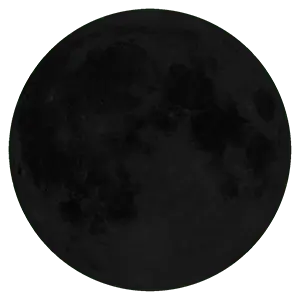
यह चंद्रमा की पहली और अदृश्य कला है, जिसमें चंद्रमा का प्रकाशित भाग सूर्य की ओर और रात्रि भाग पृथ्वी की ओर होता है। अमावस्या केवल सूर्य ग्रहण के दौरान ही सीधे दिखाई देती है।
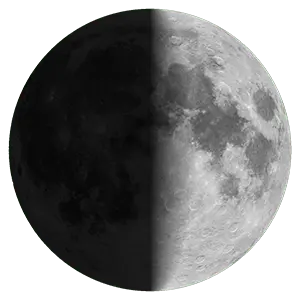
प्रथम चतुर्थांश
अमावस्या के एक सप्ताह बाद प्रथम चतुर्थांश आता है, जब चंद्रमा अपनी कक्षा का एक चौथाई पूरा कर लेता है। इसे अर्ध चंद्र भी कहते हैं। प्रथम चतुर्थांश का चंद्रमा दोपहर के आसपास उगता और मध्यरात्रि के आसपास अस्त होता है।
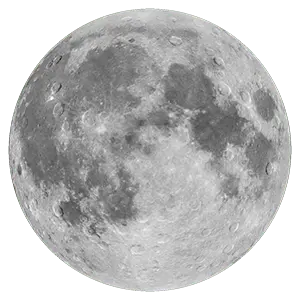
पूर्णिमा
100 % प्रकाश पर चंद्रमा का दिन वाला भाग सीधे पृथ्वी के रात्रि भाग की ओर होता है और चंद्रमा पूर्ण होता है। पूर्णिमा सूर्यास्त के आसपास उगती और सूर्योदय के आसपास अस्त होती है, तथा क्षितिज के पास बड़ी दिखती है।
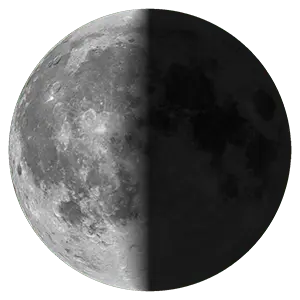
अंतिम चतुर्थांश
चंद्रमा लगभग 23 दिन की आयु में अपनी कक्षा के अंतिम (तीसरे) चतुर्थांश में प्रवेश करता है। केवल आधा भाग प्रकाशित दिखता है। यह कला देर रात और भोर (लगभग 6 बजे) दिखाई देती है।
It depends on the time of day. The Moon is very hot in the daytime and very cold at night. The average temperature on the Moon varies from -298 degrees Fahrenheit (-183 degrees Celsius), at night, to 224 degrees Fahrenheit (106 degrees Celsius) during the day.
और देखें चंद्र तथ्यA supermoon occurs when the Moon's orbit is closest (perigee) to Earth at the same time the Moon is full. At such a time, the Moon can look larger and brighter than it normally does - especially when it is seen rising above the horizon. However, it's important to note that the actual difference in size and brightness between a supermoon and an average full moon is not typically dramatic, and may not be noticeable to the naked eye without a direct comparison.
और देखें चंद्र तथ्यThe Moon crust is made of composed primarily of oxygen (O), silicon (Si), magnesium (Mg), iron (Fe), calcium (Ca), and aluminum (Al), but important minor and trace elements such as titanium (Ti), uranium (U), thorium (Th), potassium (K), and hydrogen (H) are present as well. Below the crust is the mantle coming, with a thickness of roughly 1350 km is far more extensive than the crust, which has an average thickness of about 50 km. The mantle is made of olivine, orthopyroxene and clino pyroxene. Finally, at the center is the Moon’s dense, metallic core. The core is largely composed of iron (Fe) and some nickel (Ni). The inner core is a solid mass of about 480 km in diameter. Surrounding the solid inner core is a fluid outer core, that brings the total diameter of the core to about 660 km.
और देखें चंद्र तथ्यAn orange moon means the shorter wavelengths of light are being filtered away. This could be due to the low position on the horizon causing the light to go through more atmosphere, smoke in the air, or pollution.
और देखें चंद्र तथ्यThe Moon makes Earth a more livable planet by moderating our home planet's wobble on its axis, leading to a relatively stable climate.
और देखें चंद्र तथ्यThe First Quarter is the third lunar phase. The Moon is a quarter of the way around its orbit and you see half of its illuminated side. That’s why sometimes it is also termed as Half Moon. A first quarter moon rises around noon and sets around midnight. It’s high in the sky in the evening and makes for excellent viewing.
और देखें चंद्र कलाएँThis is the sixth phase of the Moon. The waning gibbous phase is between a Full moon and a Half moon and it means that the Moon is getting smaller and smaller. A Wanning Gibbous Moon rises around 9 pm and sets around 9 am.
और देखें चंद्र कलाएँThis is the eighth and also the final phase of the Moon. The Moon is nearly back to the point in its orbit where its dayside directly faces the Sun, and all that we see from our perspective is a thin curve. The Wanning Crescent Moon can be seen from pre-dawn to early afternoon.
और देखें चंद्र कलाएँYes, everyone sees the same phases of the Moon. People north and south of the equator do see the Moon’s current phase from different angles, though. If you traveled to the other hemisphere, the Moon would be in the same phase as it is at home, but it would appear upside down compared to what you're used to!
और देखें चंद्र कलाएँThe Full Moon is the fifth lunar phase. The Moon appears fully illuminated from Earth's perspective. This occurs when Earth is located between the Sun and the Moon. A Full Moon rises around sunset and sets around sunrise.
और देखें चंद्र कलाएँA lunar eclipse occurs when the Moon moves into the Earth's shadow. This can occur only when the Sun, Earth, and Moon are exactly or very closely aligned with Earth between the other two, which can happen only on the night of a Full Moon. A total lunar eclipse occurs when the Moon falls entirely within the Earth's umbra.
और देखें रोचक तथ्यBelievers in the lunar cycle effects on human bodies (including the hair) ascribe a similarly forceful effect of this gravitational field on the bodies of humans and animals. According to their belief system, hair grows stronger, hair care products work better, and the styling is more beautiful if the hair care regimen is scheduled according to the lunar calendar. Conditions during the waxing moon promote hair growth after a haircut. Therefore, you should cut your hair between the new and full moon if you want your hair to grow fast after a haircut.
और देखें रोचक तथ्यAt first, Blue Moon is nothing to do with the actual color of the Moon. A Blue Moon is the second Full Moon in a calendar month. Typically, months have only one Full Moon, but sometimes a second one sneaks in. Most months are 30 or 31 days long while Full Moons are separated by 29 days, so it’s possible to fit two full moons in a single month. This happens every two and a half years, on average. Blue Moons dependent on the Gregorian calendar and time zones so you should check our Moon Calendar.
और देखें रोचक तथ्यIn many languages the Moon is gender neutral, in other languages it’s not. For example, in French, the Moon is feminine (la lune) and in German, the Moon is masculine (der Mond). From a cultural point of view, the Moon is often referred as feminine. For example, in Greek mythology, Selene was the Goddess of the Moon and so the Moon has been known as Selene. In Roman mythology, it was the Goddess Luna, from where we get Lunar cycles from. This would give the moon a female gender.
और देखें रोचक तथ्यNo one. According to international law, no one can lay territorial claim to the Moon or any other celestial body, so a national flag on the Moon is purely symbolic. There are also websites where you can buy a certificate saying you own a plot of land on the Moon, but this isn't worth the paper it is written on.
और देखें रोचक तथ्य






MoonPhaseToday.org आपको आज और आज रात, या किसी भी दिन, महीने और वर्ष की चंद्र कला देखने देता है। चंद्र कला की गणना आपके समय क्षेत्र पर आधारित है, लेकिन हम आपको सटीक समय UTC प्रारूप में भी दिखाते हैं। आशा है कि आपको चंद्र कलाएँ जानने के लिए हमारा उपकरण उपयोगी और सरल लगेगा।
MoonPhaseToday.org