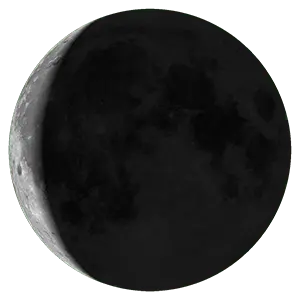
Bugün ve bu gece için güncel Ay evresi Küçülen Hilal evresidir. Ay şu anda 11.1 % aydınlık ve küçülen. Ekim 3, 2021Bugün Ay 26.3 günlüktür.
Dünya ile Ay arasındaki yaklaşık uzaklık 381,379 ve bir sonraki evreye 3 gün kaldı – (Yeni Ay).
Bu aydaki tüm günlük Ay evrelerini görmek için Ekim 2021 Ay Evreleri Takvimi sayfasını da ziyaret edin.

Ay Evresi: Küçülen Hilal
Önceki evre: Son Dördün ()
Ay uzaklığı: 381,379 km
Aydınlanma: 11.1 %
Ay yaşı: 26.3 gün
Sonraki evre: Yeni Ay ()
Ay açısal boyutu: 0.52
Güneş uzaklığı: 149,678,623 km
Ay’ın Burcu: Başak

2021-09-07 – 2021-10-06
| Ay Evresi | TARİH VE SAAT |
TARİH VE SAAT (UTC) |
|---|---|---|
| Yeni Ay | ||
| İlk Dördün | ||
| Dolunay | ||
| Son Dördün | ||
| Yeni Ay |
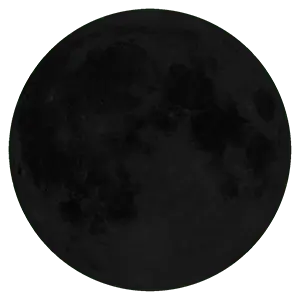
Bu, Ay’ın ilk ve görünmeyen evresidir; Ay’ın aydınlık tarafı Güneş’e, gece tarafı Dünya’ya dönüktür. Yeni Ay yalnızca bir Güneş tutulması sırasında doğrudan görülebilir.
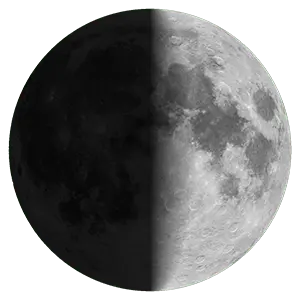
İlk Dördün
Yeni Ay’dan bir hafta sonra, Ay yörüngesinin dörtte birini tamamladığında İlk Dördün gelir. Yarım Ay olarak da adlandırılır. İlk Dördün Ayı öğle civarı doğar, gece yarısı civarı batar.
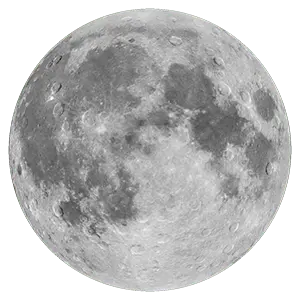
Dolunay
%100 aydınlanmada Ay’ın gündüz tarafı doğrudan Dünya’nın gece tarafına dönüktür ve Ay doludur. Dolunay gün batımında doğar, gün doğumunda batar ve ufka yakınken daha büyük görünür.
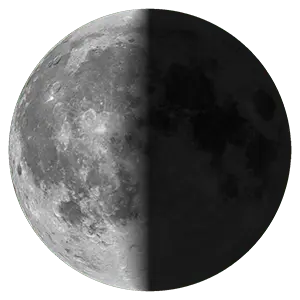
Son Dördün
Ay, yaklaşık 23 günlükken yörüngesinin Son (Üçüncü) Dördün evresine girer. Yalnızca yarısı aydınlık görünür. Bu evre gece geç saatlerde ve sabah erken (saat 6) görülebilir.
No, the moon has no water and has only a very thin and tenuous atmosphere (called an exosphere) so it cannot trap heat or insulate the surface. So, for example, there is no wind to create weather system. The Moon does, in fact, affect the Earth's climate and weather patterns in several subtle ways.
Daha fazla Ay GerçekleriHere are the top 5 things that make the Moon so unique.
1. The Moon is Earth's only permanent natural satellite.
2. Moon dust smells like gunpowder.
3. The Moon keeps the same face pointing toward the Earth.
4. The Moon has no – or just a really thin – atmosphere so there is no weather.
5. The Moon is visible in daylight nearly every day.
The Moon crust is made of composed primarily of oxygen (O), silicon (Si), magnesium (Mg), iron (Fe), calcium (Ca), and aluminum (Al), but important minor and trace elements such as titanium (Ti), uranium (U), thorium (Th), potassium (K), and hydrogen (H) are present as well. Below the crust is the mantle coming, with a thickness of roughly 1350 km is far more extensive than the crust, which has an average thickness of about 50 km. The mantle is made of olivine, orthopyroxene and clino pyroxene. Finally, at the center is the Moon’s dense, metallic core. The core is largely composed of iron (Fe) and some nickel (Ni). The inner core is a solid mass of about 480 km in diameter. Surrounding the solid inner core is a fluid outer core, that brings the total diameter of the core to about 660 km.
Daha fazla Ay GerçekleriAn analysis of moon's mineral composition suggests that the moon is around 4.425 billion years old.
Daha fazla Ay GerçekleriA "micromoon" is a term used in popular astronomy to describe a full moon or a new moon that occurs when the moon is at or near its apogee, which is the furthest point from Earth in its elliptical orbit. This is the opposite of a "supermoon," which occurs when a full moon or new moon is at or near its perigee, which is the closest point to Earth in its orbit."
Daha fazla Ay GerçekleriThe Moon is the fifth largest satellite in the Solar System and the biggest in comparison to its host planet, with a diameter about one-quarter that of Earth. The exact diameter is 2159.14 miles (3 474.8 km ).
Daha fazla Ay EvreleriA supermoon occurs when the Moon's orbit is closest (perigee) to Earth at the same time the Moon is full. At such a time, the Moon can look larger and brighter than it normally does - especially when it is seen rising above the horizon. However, it's important to note that the actual difference in size and brightness between a supermoon and an average full moon is not typically dramatic, and may not be noticeable to the naked eye without a direct comparison.
Daha fazla Ay EvreleriThis is an optical illusion. The Moon looks large shortly after it rises when it's still touching the horizon. This is not the same as a Supermoon.
Daha fazla Ay EvreleriNo, the moon has no water and has only a very thin and tenuous atmosphere (called an exosphere) so it cannot trap heat or insulate the surface. So, for example, there is no wind to create weather system. The Moon does, in fact, affect the Earth's climate and weather patterns in several subtle ways.
Daha fazla Ay EvreleriNo, it doesn’t generate its own light. “Moonlight” is really sunlight that has reflected off of the Moon’s surface. In the same way that the Sun illuminates Earth, the Moon reflects the Sun's light, making it appear bright in our sky.
Daha fazla Ay EvreleriAn analysis of moon's mineral composition suggests that the moon is around 4.425 billion years old.
Daha fazla EğlenceliThis is an optical illusion. The Moon looks large shortly after it rises when it's still touching the horizon. This is not the same as a Supermoon.
Daha fazla EğlenceliNo, it doesn’t generate its own light. “Moonlight” is really sunlight that has reflected off of the Moon’s surface. In the same way that the Sun illuminates Earth, the Moon reflects the Sun's light, making it appear bright in our sky.
Daha fazla EğlenceliThe Moon crust is made of composed primarily of oxygen (O), silicon (Si), magnesium (Mg), iron (Fe), calcium (Ca), and aluminum (Al), but important minor and trace elements such as titanium (Ti), uranium (U), thorium (Th), potassium (K), and hydrogen (H) are present as well. Below the crust is the mantle coming, with a thickness of roughly 1350 km is far more extensive than the crust, which has an average thickness of about 50 km. The mantle is made of olivine, orthopyroxene and clino pyroxene. Finally, at the center is the Moon’s dense, metallic core. The core is largely composed of iron (Fe) and some nickel (Ni). The inner core is a solid mass of about 480 km in diameter. Surrounding the solid inner core is a fluid outer core, that brings the total diameter of the core to about 660 km.
Daha fazla EğlenceliThe Moon is the fifth largest satellite in the Solar System and the biggest in comparison to its host planet, with a diameter about one-quarter that of Earth. The exact diameter is 2159.14 miles (3 474.8 km ).
Daha fazla Eğlenceli






MoonPhaseToday.org, bugün ve bu gece ya da herhangi bir gün, ay ve yıl için Ay evresini görüntülemenizi sağlar. Ay evresi hesaplaması saat diliminize göre yapılır, ancak size tam saatleri UTC biçiminde de gösteririz. Aracımızı Ay evrelerini bulmak için kullanışlı ve kolay bulacağınızı umuyoruz.
MoonPhaseToday.org